January 16, 2026


Labor History: First National Union Formed for Black Workers; Akron Rubber Workers Innovate Strike Tactics
(This article appeared in the January/February 2026 issue of The American Postal Worker magazine)
First National Union Formed to Address Black Workers’ Needs During Reconstruction Era
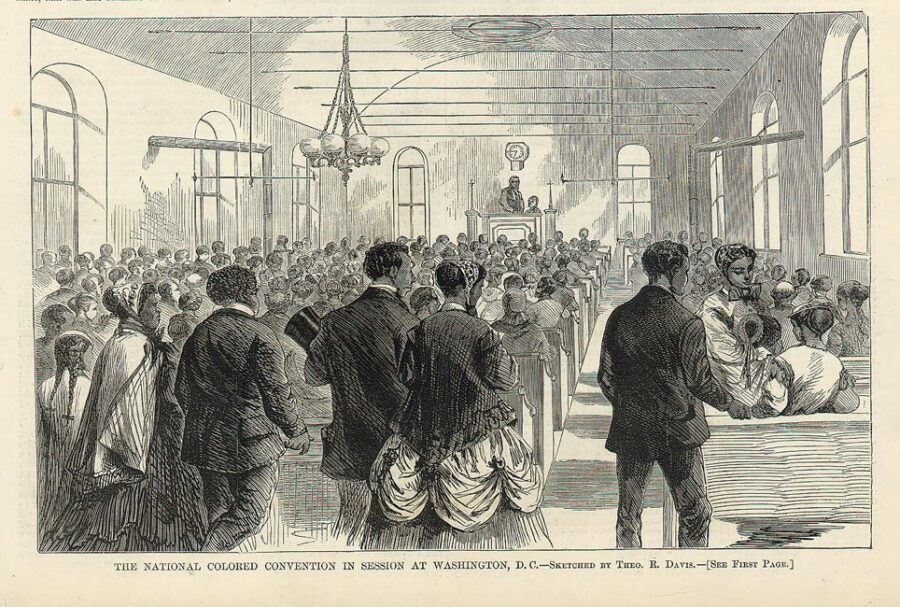
Jan. 5, 1869: Black workers formed the Colored National Labor Union (CNLU) during the National Colored Convention (NCC) in Washington, DC. The convention focused on securing the right to vote, access to education, and constitutional rights in the post-Civil War Reconstruction Era.
In August 1866, more than a year after the Civil War ended, trade union leaders formed the first major national labor organization in the United States – the National Labor Union (NLU). Despite national-level attempts to welcome all workers, regardless of color, NLU locals excluded Black workers from joining their organizations due to racial division and competition.
Struggling to find representation in their workplaces, 214 Black trade workers from 21 states assembled at the January 1869 NCC to establish the CNLU, organize Black labor collectively, across employers, trades, and geography, and improve the racialized conditions oppressing Black workers at the time.
This CNLU became the second major national labor organization in the country. It mirrored the NLU philosophically and structurally, but as an organization for Black workers in skilled trades, with additional aims to advocate for equal representation for Black workers in the workforce, government aid for education, and farmland for poor Black workers in the South.
The founding president was Isaac Myers, a caulker who served until 1872, when he ceded the position to civil rights activist Frederick Douglass.
Akron Rubber Workers Innovate Strike Tactics
January-February 1936: Rubber workers at the Firestone and Goodyear tire manufacturing companies in Akron, OH, began two of the first major sit-down strikes in the country, after Akron’s General Tire plant workers successfully pioneered the tactic in 1934. The sit-down strikes prevented the companies from using strikebreakers and paved the way for the successful Flint sit-down strike of 1936-1937.
Akron rubber workers adopted the tactic after playing a baseball game between unionized workers from several Akron tire plants in the early 1930s. They disliked the fact that an umpire was not a union worker, so they sat down on the field rather than play in the game.
In January 1936, at the Firestone Tire and Rubber Co., management wanted to speed up production, but representatives from the United Rubber Workers (URW) union opposed their plans. Management sent a company spy to find a workaround. Their agent provoked a fight with union committeeman Clayton Dicks, who was suspended for one week without pay. Outraged at the suspension, workers sat down on Jan. 29, 1936, occupying the plant for three days until Dicks was reinstated with back pay.
On Feb. 16, 1936, workers at Goodyear also participated in a sit-down strike after the company announced plans to lay off workers, increase work hours, and reduce pay. Workers sat down for two days, followed by a month-long picket strike, which quickly spread to the rest of the city’s tire factories in solidarity. About 10,000 workers from various trades picketed the plant. Goodyear made several attempts to break the strike, first by the police, who refused to confront workers with violence, then by 5,000 members of the company-funded Law and Order League, who were talked down from violence by the Summit County Central Labor Council.
Goodyear eventually capitulated, meeting most of the workers’ demands so they could continue pro-duction. The demands included layoffs by seniority, six-hour work shifts, and regular labor-management meetings.