January 7, 2026

Leading Publication on Federal Workforce, Government Executive, Interviews New APWU President Jonathan Smith

On Jan. 6, Government Executive, the leading publication that provides news, analysis, and insight for leaders and employees of the U.S. federal government, released an interview with new APWU President Jonathan Smith that discusses his priorities as union president, his personal connection to the Postal Service, how he plans to fight postal privatization efforts, and his views on the Postal Service’s Delivering for America 10-year plan. Click here to read more, or read the text in its entirety below.

Interview by Government Executive Staff Reporter Sean Michael Newhouse

‘I am what I am’: American Postal Workers Union’s new president talks leadership during inflection point for U.S. Postal Service

Jonathan Smith said that he is opposed to the ongoing postal modernization plan called Delivering for America but believes the Postal Service should expand the services that it provides to the public.

Jonathan Smith took the helm of the American Postal Workers Union in November after prevailing in the 200,000-member organization’s election the previous month.

Formerly president of the New York Metro Area Postal Union, APWU’s largest local, since 2012, and a member of the union since 1988, Smith assumes leadership at a time when the Postal Service both celebrates its 250th anniversary and faces a contentious debate over its future and how it will modernize. 

In this interview with Government Executive, Smith discusses his personal connection to postal work, how he plans to fight any effort to privatize the Postal Service and his views on Delivering for America, the 10-year overhaul plan started by former Postmaster General Louis DeJoy and being continued by current PG David Steiner.

Editor’s note: The following interview has been lightly edited for clarity and length. 

What made you want to become the national president of APWU?

Well, I’ve been working in the Postal Service for 38 years, and I am the proud grandson of a postal worker. My grandfather was a custodian in the Postal Service, and he worked in the Postal Service for 25 years. I can remember when I first came to the post office, my grandfather told me to go find that union. 

My grandfather said that because [he] was originally from Macon, Georgia, and he worked on the tobacco fields. He left the bigotry, the racism, and the hatred of the South to come up North to give his family a better opportunity. So, I grew up under the umbrella of the Postal Service, because when he came up North, he got a job in the Postal Service, and he got introduced to rights that he never knew existed when he worked out on the tobacco fields. 

He got introduced to the principle of “We are only as great as our unity.” And he instilled those principles in me. 

With an eighth grade education, through the Postal Service, he got an opportunity to bring his family and introduce them to a piece of the American dream. That’s what the Postal Service means to me, and that’s why I ran for national president. 

Before that, I was the local president in New York for well over a decade, and I just like helping people that sometimes have difficulty fighting for themselves. I think God just put it on my spirit, and my grandfather put it in my heart, that this was my mission in life. 

In your first video message to APWU members, you made it clear that one of your top priorities is going to be fighting any effort to privatize the Postal Service. How do you plan to lead that fight?

The Postal Service has greatly changed since I first came into [it]. As the union, I realize that we do a great job of putting out information, but we also do a lousy job of putting out education. 

I plan to first start by educating the members on the greatness of APWU and the sacrifices that were made for them to have the opportunities that they have today, because you have no reason to fight for what you have until you first realize what it took to get there. 

I happen to be lucky that I was educated on the great 1970s strike of the Postal Service, and it was an illegal strike. I can remember watching the video of this great postal strike, and there was a woman on there that left a lasting impression on me. I can’t really remember her name, but I can remember her words. They asked her, “Why would you go on strike and take a chance on losing everything because of the illegal strike and they can fire you?” And she said “This is not about me. This is about the next generation.”

Well, I am that next generation, and I owe her a debt of gratitude by starting to educate the postal employees to take their power back by standing up. We’re the last blue collar bastion left in America where we hire veterans, where we have people coming from all walks of life. What is a better example of what America should look like than the Postal Service? 

But we need to educate them that it was hard to get these rights that we have within our contract, but it’s very easy to lose these rights. So, my first priority is a campaign on educating the members on what it took for us to get to where we are, in order to encourage them to have the courage to stand up to fight for where we need to go.

What are your other priorities as president? 

We got to stop the closing and consolidation and the privatization of the Postal Service. The Postal Service belongs to the American people, and it’s been around for 250 years. I’m here to fight for it to be here 250 more years. 

This is an essential institution, like I said earlier for veterans, but also the elderly. We serve the communities, and my goal is to talk to the Postal Service about doing more, offering more to the community of things we could do. Postal banking was a great idea. With the Postal Service being one of the most trusted government services that we have, wouldn’t it be great if you were able to bring your bank account to the Postal Service? Wouldn’t you feel so much more secure? 

What about charging stations and fishing licenses? We already do passports and stuff like that. I’m here to enlighten the American people that we are written into the Constitution as a service for a reason, even though the government keeps trying to make us a business, we are not a business. 

I am a registered Independent, meaning I don’t affiliate myself with one party or the other. I affiliate myself with issues that best benefit the working class, and I’m proud of that. So, these are some of the priorities. 

We have to bring knowledge back, and knowledge is powerful. An informed membership is a powerful membership. An informed America is a powerful America, and I plan to lead a vigorous campaign on education and information in order for us to take our rightful place in America as a working class of this country. Because it is the working class that created the middle class, which ultimately created the greatness of this country.

When you refer to the closing and consolidation of the Postal Service, is that a reference to Delivering for America?

It’s an absolute reference to the 10-year plan. I should say 10 years of really being unclear, because even to this day, I still have no idea about what the intent is of the 10-year plan. How does it benefit the American people? Notice, I say, how does it benefit the American people?

We are proud of the service that we offer the American people. It boggles my mind, especially with these politicians, that they have a convenient memory. When Hurricane Sandy was around, when anthrax was around, when COVID-19 was around, we were heroes and we were essential. Now, when there’s nothing going on, all of a sudden, we’re not heroes and we’re not essential. 

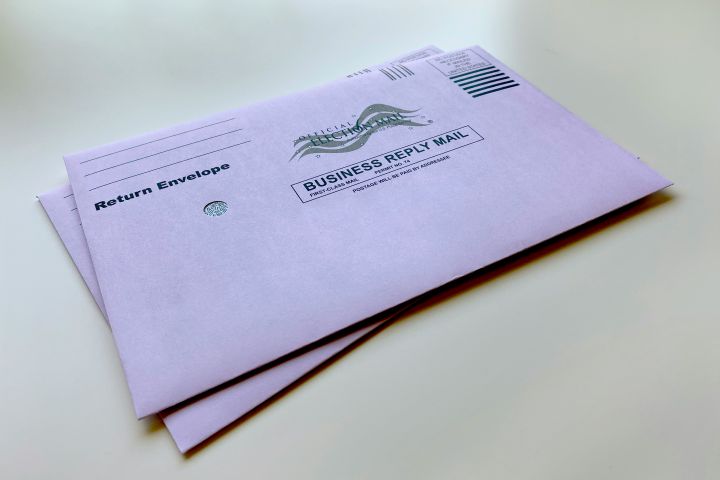
We want people to be able to participate fully in this democracy, and that starts with things like [Vote-by- Mail]. Vote-by-Mail is very important to the American people, so they can make sure that their vote is not only cast and their voice heard, but it’s secure. There is no organization that is better on delivering that than the Postal Service. We have been doing it in places like Oregon and Utah where they have [Vote- by-Mail] initiatives, and they’ve had it for many years with no problems. But all of a sudden, when you want to politicize the Postal Service, it’s a problem with the Postal Service making people have easier access to the doors of democracy. 

(Oregon and Utah are two states that allow elections to be conducted entirely by mail, but there have been recent efforts in both states to limit the practice.) 

What has been your impression so far of the new Postmaster General David Steiner? 

Well, I’ve been trying to get a meeting with Mr. Steiner. I know that he was on the executive board of FedEx, and his claim to fame with Waste Management [where he was CEO] was he took the union population down from 32-33% to 20%, and he liked to brag on that. So, I surmise from what my grandfather taught me: “If it looks like a duck, sounds like a duck, walks like a duck, it must be a duck.” 

But I can’t tell you that I have any personal impressions, because I have not met the man yet, but your record says who you are. And looking at his record, it says that he is a privatizer and that he would be for possibly privatizing the Postal Service. I hope that my first impressions based on the information that I gathered are not true, but I remain open minded and ready to openly negotiate, as long as he comes to the table with an open mind and with understanding of what fairness and justice looks like. I’m willing to work with anyone. 

(After his tenure began in July, Steiner said in a video message to postal employees that he is against privatizing the agency.) 

Is there anything else you’d like to add? 

I am what I am. Let me say this, I am a labor leader under the tutelage of [former APWU presidents] Moe Biller and Bill Burrus as well as [APWU Secretary-Treasurer] Elizabeth Powell. The reason that I say that is because what has hurt labor is that we have too many labor leaders that have become politicians. What do I mean by that? When you go out and you try to gauge what other people’s opinion is and to formulate your own opinion, then you’re a politician. But when you go and see what’s wrong and realize it’s your job to convince the people this is what we must do to make things better for all of us, then you are a labor leader. 

I am proud to say that I am 100% labor leader, and that’s what I will remain to be. I am what I am. I fight hard because I care, and I believe in the greatness of my members and the working class, because this is bigger than just APWU. This is about working people all over America realizing that there is a place for us in this country, if we only believe.